Origins, Apprenticeship, and the Birth of a Modern Trunk (1821–1859)
Long before Louis Vuitton became shorthand for luxury, status, or aspiration, he was a boy born into obscurity—shaped not by salons or ateliers, but by geography, labor, and necessity. His story begins far from Paris, far from fashion, and far from the polished retail façades that would eventually bear his name. It begins instead in the Jura: a landscape of timber, stone, and long winters, where craftsmanship was less an art than a requirement, and durability carried its own quiet prestige.
What makes Vuitton’s early life so compelling is that it does not read like the origin myth of a fashion house. It reads like the blueprint of a maker—someone attuned to materials, pressure, and movement. Before there was a monogram, there was the problem of travel itself: trunks dragged across platforms, strapped to carriages, stacked in ship holds, and opened again and again as life unfolded on the road. Vuitton’s genius was never just taste; it was translation—taking the harsh realities of modern mobility and turning them into objects that protected, organized, and elevated what people carried. In that alchemy—utility refined into elegance—you can already see the house taking shape, decades before it would become a global symbol.
Jura: a childhood shaped by material reality (1821–1835)

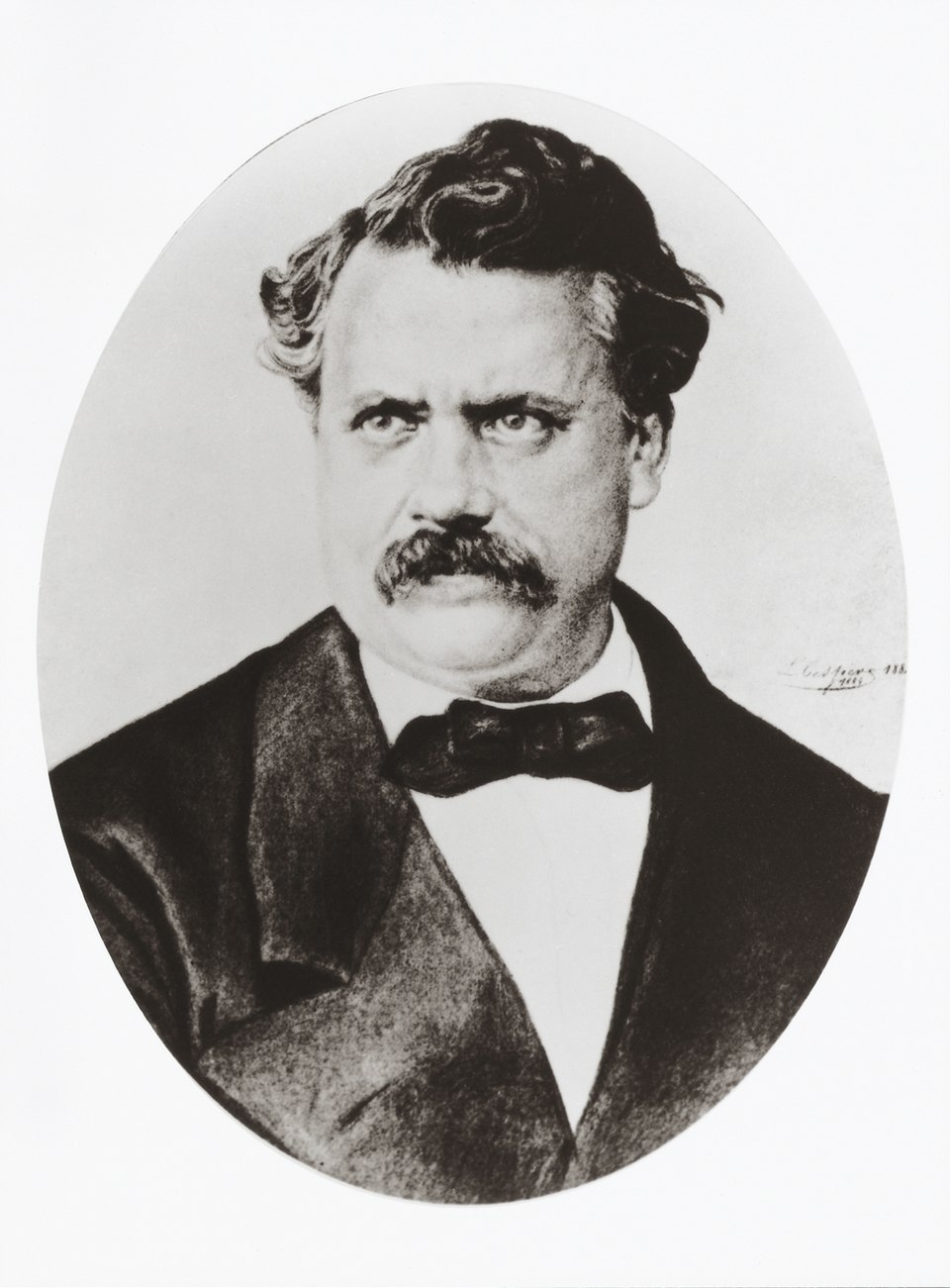
Louis Vuitton was born on August 4, 1821, in Anchay, a small rural hamlet in the Jura region of eastern France. Jura in the early nineteenth century was not a place of commerce or culture in the Parisian sense; it was a landscape defined by forests, stone, seasonal labor, and the quiet discipline of making do. The rhythms of life were agricultural and artisanal, not intellectual or mercantile. Education was limited, opportunities were scarce, and ambition—when it existed—was more often expressed through departure than advancement.
Louis’s mother died when he was young, and his father remarried. Contemporary biographies stop short of dramatizing this loss, but the effect is not difficult to infer. In a region where survival depended on contribution, children matured early. Labor was not an abstract concept; it was the organizing principle of daily life. The Jura economy produced woodworkers, millers, stonecutters, and craftsmen—people whose skills were practical, transferable, and learned through observation rather than theory.
This environment matters because it produced something essential to Louis Vuitton’s later work: an intuitive respect for materials and function. Luxury, as the modern world understands it, did not exist in Jura. But durability did. Precision did. And the quiet pride of craftsmanship—of making something that worked as intended and endured under use—was deeply ingrained.
Leaving Anchay: ambition expressed as movement (1835–1837)

At the age of thirteen, Louis left home.
There is no evidence of a single inciting event—no dramatic argument or grand declaration. What survives in the historical record is the fact of departure itself. In 1835, Louis Vuitton set out on foot for Paris, a journey of roughly 300 miles. It took him nearly two years to complete.
This detail is often romanticized, but its real significance lies elsewhere. To walk from Jura to Paris in the 1830s was not a symbolic gesture; it was a logistical undertaking that required adaptability, physical endurance, and improvisation. Along the way, Louis worked odd jobs to support himself. He would have slept where he could, eaten what he earned, and learned—quickly—how to move through unfamiliar environments without the protection of family or community.
This was not yet the world of steam-powered abundance. France was in the early stages of industrial transition, and Paris was swelling with migrants seeking opportunity to forge a better life for themselves. For a provincial teenager, the city represented possibility, but also anonymity. Vuitton’s survival would depend solely on his usefulness.
By the time Louis arrived in Paris in 1837, he was no longer simply a runaway youth. He was a young man with an embodied understanding of travel—its discomforts, its risks, and its demands. That understanding would later become the foundation of his life’s work.
Paris in transition: the city Louis Vuitton entered

The Paris Louis encountered was not yet the city of Haussmann’s grand boulevards. It was dense, uneven, and in many places unsanitary—a medieval city straining under the pressures of modernization. Yet it was also the gravitational center of French economic and cultural life.
Crucially, Paris in the 1830s was becoming a city on the move.
Railways were emerging. Steamships were shrinking distances. The aristocracy and bourgeoisie traveled more frequently, and for longer durations. Travel was no longer the exclusive domain of diplomats and soldiers; it was becoming a feature of civilian life for those with means. But infrastructure lagged behind ambition. Roads were rough. Luggage was mishandled. Clothing was expensive, fragile, and difficult to transport without damage.
It was into this rapidly evolving Paris that the young Louis Vuitton arrived, and it was there that he would embark on the path toward becoming a layetier-packeur, beginning the apprenticeship that would define his craft and shape his future.
The layetier-packeur: an unsung profession

Louis Vuitton apprenticed under Monsieur Maréchal, a respected layetier-packeur, which literally means: a maker of boxes and a professional packer. This was not a glamorous trade, but it was a critical one.
A layetier-packeur did more than build containers. He understood wardrobes, fabrics, hats, shoes, documents, jewelry, and personal effects. He knew how to layer garments to avoid creasing, how to protect delicate items from moisture, and how to distribute weight so that trunks could survive weeks of transit by carriage, rail, and ship.
This profession sat at the intersection of craftsmanship and logistics. It required carpentry, textile knowledge, spatial reasoning, and an almost forensic attention to detail. A poorly packed trunk could ruin a wardrobe—and with it, a client’s social standing. It could also undermine the credibility of the trunk maker. In a trade built on trust, a single failure could travel faster than any carriage—while flawless workmanship built a reputation that clients returned to, and recommended, for years.
Louis proved adept.
Under Maréchal, he learned to design and manufacture products that could be used for real travel: not just how to build a trunk, but how it would be carried, stacked, jostled, opened, and repacked again and again. The emphasis was always on function first. The elegance of a trunk followed the mastery of its construction, not the other way around.
These years are critical to understanding Louis Vuitton the founder, because they reveal a mindset fundamentally different from that of a contemporary fashion designer. Vuitton did not begin with aesthetics. He began with recognizing problems and developing solutions that would overcome them.
Reputation before brand: earning elite trust (1840s–early 1850s)

By the 1840s, Louis Vuitton had established himself as a skilled and reliable craftsman in Paris. His reputation grew quietly, passed along through recommendation rather than advertisement. In elite circles, discretion mattered as much as quality.
The pivotal moment in Vuitton’s ascent came when he entered the service of Empress Eugénie, the wife of Napoleon III. While the precise circumstances of this appointment vary slightly across sources, the significance does not. To be entrusted with the packing and protection of an empress’s wardrobe was to receive the highest possible endorsement.
It placed Vuitton at the center of imperial visibility while allowing him to remain personally inconspicuous. He was not a courtier. He was a problem-solver.
This distinction matters. Vuitton’s proximity to power did not make him powerful; it made him credible. And credibility, in nineteenth-century Paris, was currency.
Founding the workshop: 1854 and the birth of the house

In 1854, Louis Vuitton opened his own workshop and retail space at 4 Rue Neuve-des-Capucines, near the Place Vendôme. The location was strategic. It placed him within reach of affluent clientele while remaining close to the artisanal heart of the city.
The signage was understated. There was no grand declaration of luxury. The message was practical and confident: “Securely packs the most fragile objects. Specializing in packing fashions.”
This was not a fashion house in the modern sense. It was a service-oriented workshop grounded in craftsmanship and trust. Vuitton was not selling aspiration; he was selling reliability.
Yet even at this early stage, the seeds of something larger were visible. Demand was growing. Word of his quality craftsmanship was spreading. And Vuitton, ever attentive to the realities of use and the expanding needs of his clientele, began to innovate.
The flat-topped trunk: function as revolution (1858)
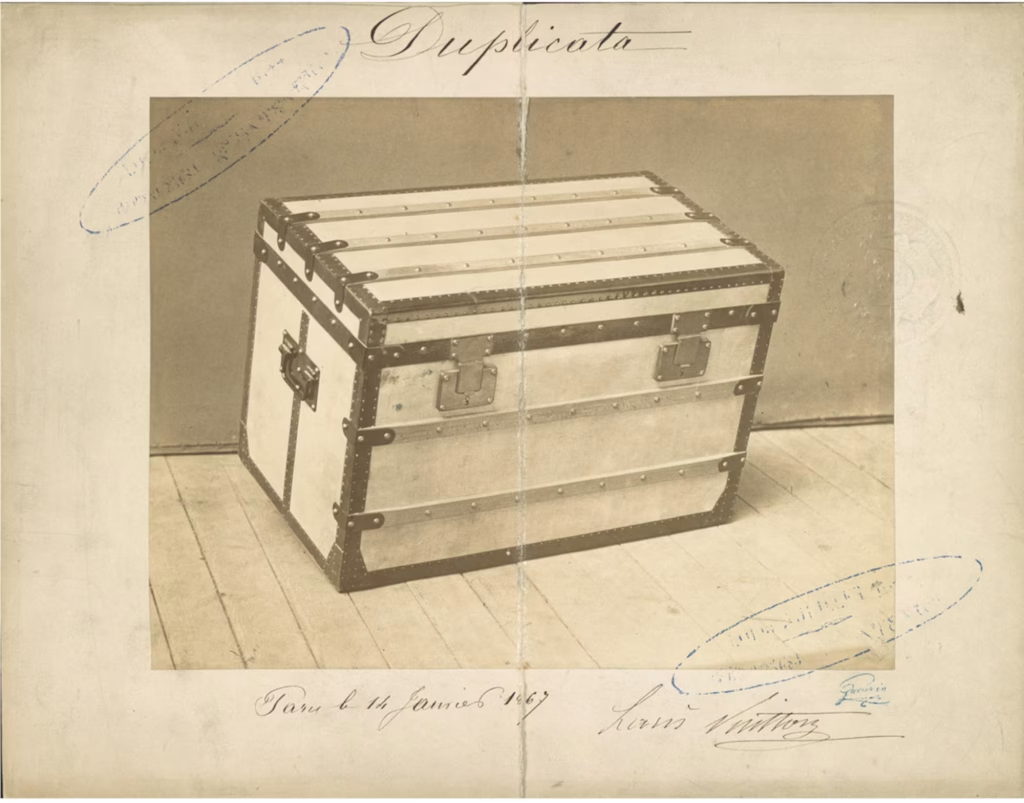
At mid-century, most travel trunks featured domed lids. The rationale was straightforward: curved tops shed water. But domed trunks had a fatal flaw in an age of increasing travel—they could not be stacked.
As railways expanded and steamships grew larger, luggage handling became more industrial. Trunks were piled, loaded, unloaded, and stored en masse. Domed trunks wasted space, shifted under load, and complicated logistics.
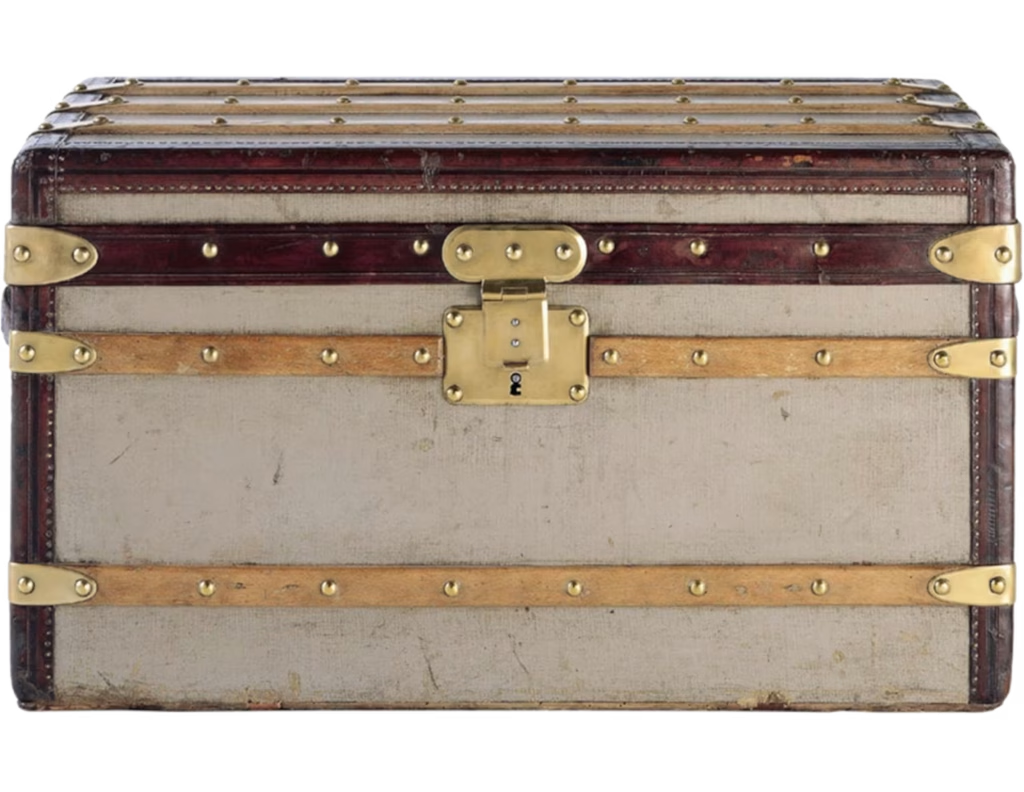
In 1858, Louis Vuitton introduced a solution that seems obvious in retrospect but was revolutionary at the time: the flat-topped trunk.
Covered in Trianon canvas—a lightweight, durable, gray material—the new trunk was waterproof, stackable, and structurally sound. It aligned perfectly with the emerging realities of modern transportation.
This was not merely a design choice. It was a craft-level breakthrough—born from hands-on experience, not theory. Vuitton had identified a friction point between traditional craftsmanship and modern logistics, and resolved it decisively.
The success was immediate.
Scaling craft: Asnières and industrialization (1859)

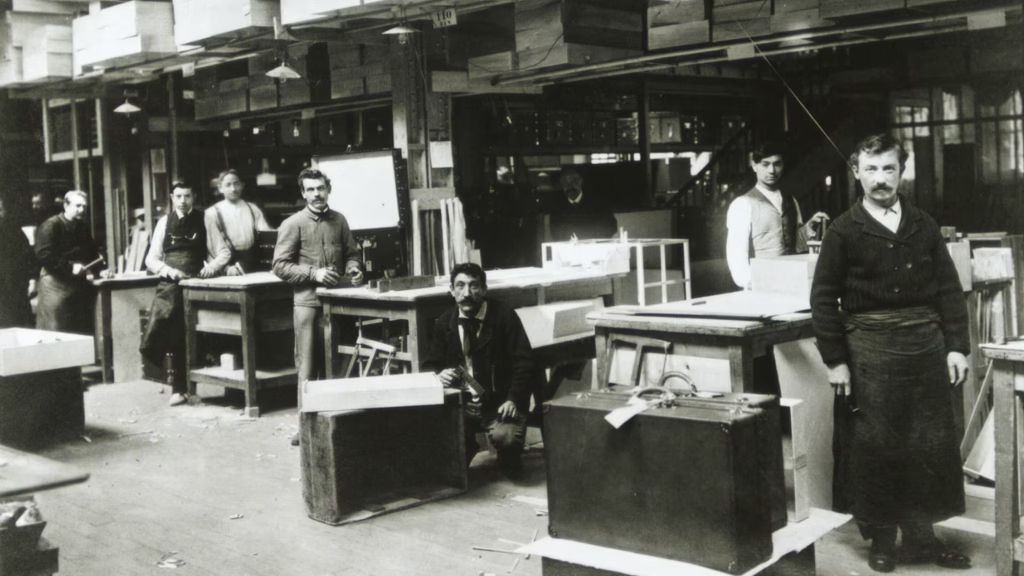
Demand quickly outpaced the capacity of the Rue Neuve-des-Capucines workshop. In 1859, Vuitton established a larger manufacturing facility in Asnières-sur-Seine, just outside Paris.
Asnières allowed for expanded production while maintaining quality control. It also introduced a new phase in Vuitton’s career: the transition from master craftsman to industrial organizer.
This shift is often overlooked, but it is central to the brand’s longevity. Vuitton understood that innovation without scalability would fail. The Asnières atelier became the operational heart of the business—a place where traditional handcraft could coexist with increased output.
It also became, symbolically, the bridge between Louis Vuitton the man and Louis Vuitton the institution.
Closing the first chapter
By the end of the 1850s, Louis Vuitton had accomplished something rare. He had transformed personal hardship, technical skill, and lived experience into a business that addressed the emerging needs of a modern world.
He did not invent travel. He did not invent luxury. But he redefined how people traveled with their lives—how wardrobes, uniforms, and valuables could be protected, organized, and carried across long distances without compromise. In doing so, he didn’t just make better trunks; he quietly reset expectations for what craftsmanship had to deliver in an age of accelerating movement.
The decades that followed would bring international expansion, counterfeiting battles, signature canvases, and generational transition. But the foundation was already set: a brand built not on fantasy, but on function.
And that distinction would make all the difference.