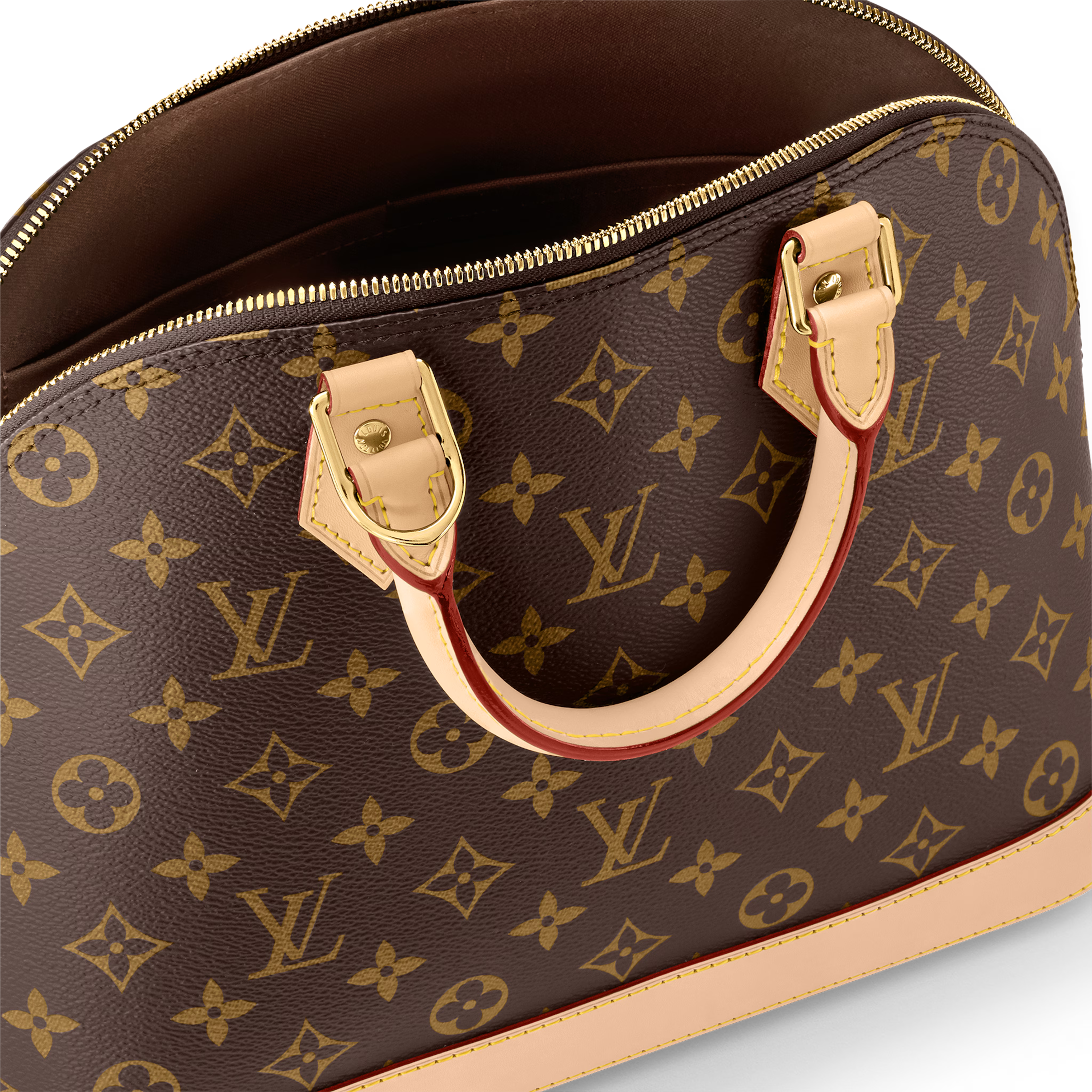
Some handbags feel like a moment. The Alma feels like a place—Paris rendered into leather and canvas, zipped shut with intention, carried like a small piece of architecture. It’s structured without being stiff, classic without being boring, and—this is the part people forget—quietly practical. The Alma is a bag you can actually live with, which is precisely why it keeps surviving trend cycles that have buried lesser “icons.”
If you want the full story, you have to treat the Alma the way Louis Vuitton treats its best objects: as a design lineage. Because the Alma didn’t arrive fully formed with a pretty little bow in a single season. It evolved. It changed names with each passing generation. It absorbed eras and transformed incrementally over decades. And it became a favorite canvas—literally—for some of the most consequential art-world collaborations in modern luxury.
What follows is the deep, no-shortcuts overview: from the Alma’s inception through its latest iterations, with a concentrated review of the variants and materials that matter, the artist editions worth knowing, and the reasons this silhouette remains one of Louis Vuitton’s most reliable “forever” buys.
The Origin Story: From Travel Logic to Art Deco City Chic
The Pre-Alma DNA: A Bag Built for Motion

Louis Vuitton’s early genius was never just “luxury.” It was mobility—how to make belongings behave beautifully while the world moved. Long before the brand became an everyday noun for status, it was a house built on engineering disguised as elegance: trunks that stacked, materials that endured, closures that secured, and silhouettes that made sense in transit. That foundational logic matters because the Alma is not simply a “pretty bag.” It’s a city handbag carrying the instincts of travel—protection, structure, security, and a kind of streamlined purpose.
In the broader Louis Vuitton ecosystem, you’ll often see the Alma’s lineage linked to early travel-minded carryalls that prioritized access and order. Whether or not a single ancestor model is named every time, the Alma’s temperament is consistent: it’s a bag that behaves.
1934 and the Squire Era: The Alma Before It Was Alma

Louis Vuitton places the Alma’s roots in 1934, when the silhouette existed under a different identity: the Squire Bag. That detail is more than trivia. It tells you when the bag’s design language was born and what it was responding to.
The 1930s were an era of modernity expressed through structure—Art Deco lines, symmetry, streamlined confidence. People were falling in love with objects that looked deliberate, engineered, and cosmopolitan. And the Alma’s silhouette—rounded at the top, squared off at the base—captures the spirit of that era translated into leather. The bag doesn’t slouch because it was never meant to. It was born in a period when discipline looked chic.
A Name That Took Its Time: Squire → Champs-Élysées → Alma

The Alma is a lesson in how designer icons actually become icons. They don’t just appear; they settle into the culture through steadily evolving iterations that reflect the era in which they’re created.
The cleanest official design arc begins with the aforementioned Squire Bag created in 1934 under Gaston-Louis Vuitton. That structured, top-handle form was reworked in the postwar period and, in 1955, reintroduced under the name Champs-Élysées. The silhouette continued to evolve quietly within the house before being formally renamed the Alma in 1992, solidifying a shape that had already been part of Louis Vuitton’s design vocabulary for decades. In 2010, the introduction of the Alma BB adapted the same architectural form to a smaller, modern scale, reflecting the way contemporary clients actually carry and use their bags today.
That 1992 moment matters. It’s the point where the brand doesn’t simply acknowledge the shape as a historical design—it codifies it as an icon. The Alma becomes permanent, not incidental. It becomes a pillar silhouette, not a cameo.
The Coco Chanel Lore: Mythology With a Pulse

No “complete” Alma story can ignore the narrative involving Coco Chanel—not because the brand insists on it, but because luxury history is often written in layers: official records on one hand, cultural mythology on the other.
In many fashion-history accounts, Chanel appears as a catalytic presence in the Alma’s story—a whispered request for a structured, dome-shaped day bag that could move effortlessly through Parisian life, refined from travel logic but no longer tethered to it. Whether every detail of that story is provable is almost beside the point. What matters is why it endures. The tale places the Alma at a rare intersection: two houses that fundamentally shaped modern style, converging around a shared ideal of restraint, utility, and quiet authority. The silhouette reads as distinctly Parisian—functional elegance made portable, architectural without being rigid, purposeful without sacrificing grace.
Louis Vuitton’s own heritage narrative is notably more restrained. The house does not position Chanel as a definitive origin, and that absence is telling. Instead, the Alma is framed as an internal evolution—an outgrowth of Vuitton’s long-standing expertise in structure, balance, and form, translated from trunks to handbags over decades. That tension between documented history and persistent lore is not a weakness; it is part of the Alma’s mystique. Luxury has always lived in the space between what can be proven and what is remembered, between archive and anecdote.
This is where the Alma stops being “just a bag” and starts behaving like an artifact. It lives in that rare overlap where disciplined construction meets pure mythmaking—where a rigorously engineered object gains real cultural weight because people keep repeating the story, wanting it to be true, and carrying it forward with every retelling. The Chanel thread endures not because it needs to be carved into stone, but because it fits the era, the city, and the values the Alma projects: restraint, utility, and a kind of effortless authority. In that sense, the Alma doesn’t merely carry history; it carries the romance of Paris itself—shaped as much by what gets whispered and believed as by what can be stamped, dated, and proven.
The Alma Timeline: A Decade-by-Decade Evolution (1930s to Today)
1930s: The Birth of the Dome

This is the era of the Squire—when the Alma’s silhouette first appears as a structured, city-appropriate handbag with Art Deco sensibility. The intent is visible even now: shape stability, graceful volume, and a closure that suggests the contents matter. The Alma begins its life not as an accessory trend, but as a design solution.
1940s: Quiet Continuity Through a Loud World
Wartime and post-war austerity changed what people bought and how they lived, but icons often survive by being useful. The Alma’s structured logic—secure, compact, composed—fits an era when practicality wasn’t optional. It’s less about flashy innovation and more about the silhouette proving it can endure.
1950s: The Rise of “Everyday Elegance”
As mid-century style leans into refined femininity and polished daywear, the Alma’s proportions feel increasingly aligned with the idea of looking “put together” as a default. This is the era where the silhouette begins to read as a natural companion to tailored coats, gloves, and city dressing—quietly Parisian without needing to shout Paris.
1960s: Modern Lines Meet Modern Women
The world shifts, hemlines rise, and fashion begins moving faster. A bag like the Alma remains relevant because it balances two competing needs: statement and structure. Even when clothing gets bolder, the Alma remains a grounding object—architectural enough to feel modern, classic enough to feel right.
1970s: Practical Glamour Finds Its Shape
This is an era of lifestyle diversification—more travel, more movement, more “day to night” logic in wardrobes. A structured, zipped bag that holds its profile becomes the kind of thing you buy because it works, then keep because it looks good. The Alma, even when not the headline icon of the decade, behaves like one.
1980s: Power Dressing, Strong Silhouettes

The 1980s reward structure. The Alma’s architecture aligns with that energy—polished, defined, unmistakably intentional. When fashion embraces boldness, the Alma remains steady: not loud by default, but strong in its outline, which is exactly what that era appreciates.
1990s: The Official Alma Era Begins (1992)

This is the pivotal decade in the modern story: the silhouette officially becomes recognized as the Alma in 1992. That naming isn’t cosmetic—it’s canonization. It marks the moment the bag becomes a stable icon within the modern Louis Vuitton lineup, ready to be carried into the collaboration-heavy, culture-saturated decades that follow.
2000s: The Collaboration Era Turns the Alma Into a Canvas

The early 2000s are when Louis Vuitton’s collaborations start to reshape what “luxury” can look like. The Alma benefits because its surface is clean and its silhouette is instantly recognizable—perfect for high-impact reimaginings like Stephen Sprouse’s graffiti and Takashi Murakami’s pop universe. The Alma becomes not only a classic handbag, but a collectible object.
2010s: The Alma BB and the Mini-Bag Moment (2010)

In 2010, the Alma BB arrives and effectively gives the silhouette a second cultural life. The BB format adapts the Alma’s architecture to a world that wants hands-free carry, smaller proportions, and a more flexible day-to-night lifestyle. It’s still the Alma—but it moves the way modern life moves.
2020s: The Icon as a Living Object (Re-editions, Resale Heat, and “Quiet Luxury”)
This decade is defined by cycles: quiet luxury, logo nostalgia, art-collab revivals, and a resale market that functions like a stock exchange for handbags. The Alma thrives in all of it. In subdued leathers it reads refined and discreet; in archival collaborations it reads like fashion history; in classic canvas it reads like a rite of passage. The silhouette doesn’t need to reinvent itself—because it already contains enough structure to wear each era well.
The Design: Why the Alma Looks the Way It Looks

More Than “Dome-Shaped”: A Handbag as Architecture
People describe the Alma as dome-shaped, and they’re not wrong, but that language is too casual for what the bag actually is. The Alma is closer to a compact architectural volume: a rounded crown anchored to a sturdy base, proportioned to hold its presence even when the day is chaotic. It’s not trying to be “cute.” It’s trying to be composed.
The Alma Codes: The Tells That Never Leave
Across decades and materials, the Alma carries a set of design codes that behave like its DNA. The structured body stays faithful to the original intent, even when rendered in softer leathers. The zip closure remains central because security is part of the Alma’s personality. The top handles—those rounded, rolled toron handles—feel unmistakably Vuitton in-hand, with a tactile confidence that makes the bag feel “finished” the moment you pick it up.
Then there are the details that quietly signal the brand’s obsession with craft: the lock and keys, the clochette, the way the hardware punctuates the silhouette like jewelry that doesn’t need to sparkle to be understood. Many modern executions add base feet, which is the kind of practical luxury upgrade that matters more than people admit—because bags don’t live on pedestals, they live on restaurant floors and conference tables and car seats.
The Quiet Math: Why It Works on the Body

The Alma’s success is almost mathematical. It’s formal enough to look correct with tailored outerwear, clean enough to work with minimal styling, iconic enough to satisfy monogram maximalism, and structured enough to avoid collapsing into a shapeless puddle by noon. It makes most outfits look more “done,” which is the real reason it refuses to leave the conversation.
Sizes and Variants: The Alma Family Tree
The Core Sizes Most People Actually Mean

Today’s Alma conversation gravitates toward a handful of sizes that cover most lifestyles.
The Alma BB is the modern darling—small, precise, and often offered with a strap, making it crossbody-friendly without sacrificing the top-handle elegance that defines the line. It’s the Alma for people who like polish but move fast.
The Alma PM sits in that “just right” territory. It reads classic, carries enough for daily essentials, and feels like the Alma in its most balanced expression—neither miniature nor oversized, just proportioned for real life.
Then there are the larger formats—Alma MM and Alma GM—which expand capacity while maintaining the silhouette’s core identity. In a world that keeps swinging between micro bags and carry-everything totes, the larger Almas quietly hold their ground as true day bags for people who want structure, not sprawl.
Neo Alma and Modern Reinterpretations

In resale listings, you’ll sometimes run into “Neo Alma” as a catch-all label, and it can feel like alphabet soup if you try to treat every name as a formal chapter in the timeline. The better approach is to recognize the pattern Louis Vuitton has relied on for decades: the Alma is a fixed idea, and the house keeps that idea intact. The domed profile, the structured base, the balanced carry—those are the bones. What changes is everything that makes the bag speak the present tense. Sometimes it’s a strap system that acknowledges how people actually move now. Sometimes it’s a softened execution that still holds its shape but wears easier. Sometimes it’s a material pivot—Empreinte, Epi, Damier variations—or hardware and finishing details that pull the silhouette forward without breaking it.
That’s the real takeaway: Louis Vuitton doesn’t “replace” the Alma; it refreshes it. The bag stays recognizably itself, then gets re-tuned for the way we live—phones, keys, crossbody convenience, daily repetition, and the expectation that luxury can be used, not babied. That’s how an icon avoids becoming a museum piece. It doesn’t chase trends, but it does learn the language of each new era—and it keeps translating its original engineering into whatever “everyday” looks like now.
Materials and Finishes: The Alma as a House Canvas
Why This Silhouette Makes Everything Look Expensive
The Alma has a rare quality: it’s disciplined enough to make any material look intentional. Canvas looks crisp. Leather looks sculptural. Patent looks glamorous. Embossing looks architectural. Because the shape holds, the finish gets to speak.
Material Personalities: Choosing the Right “Mood”
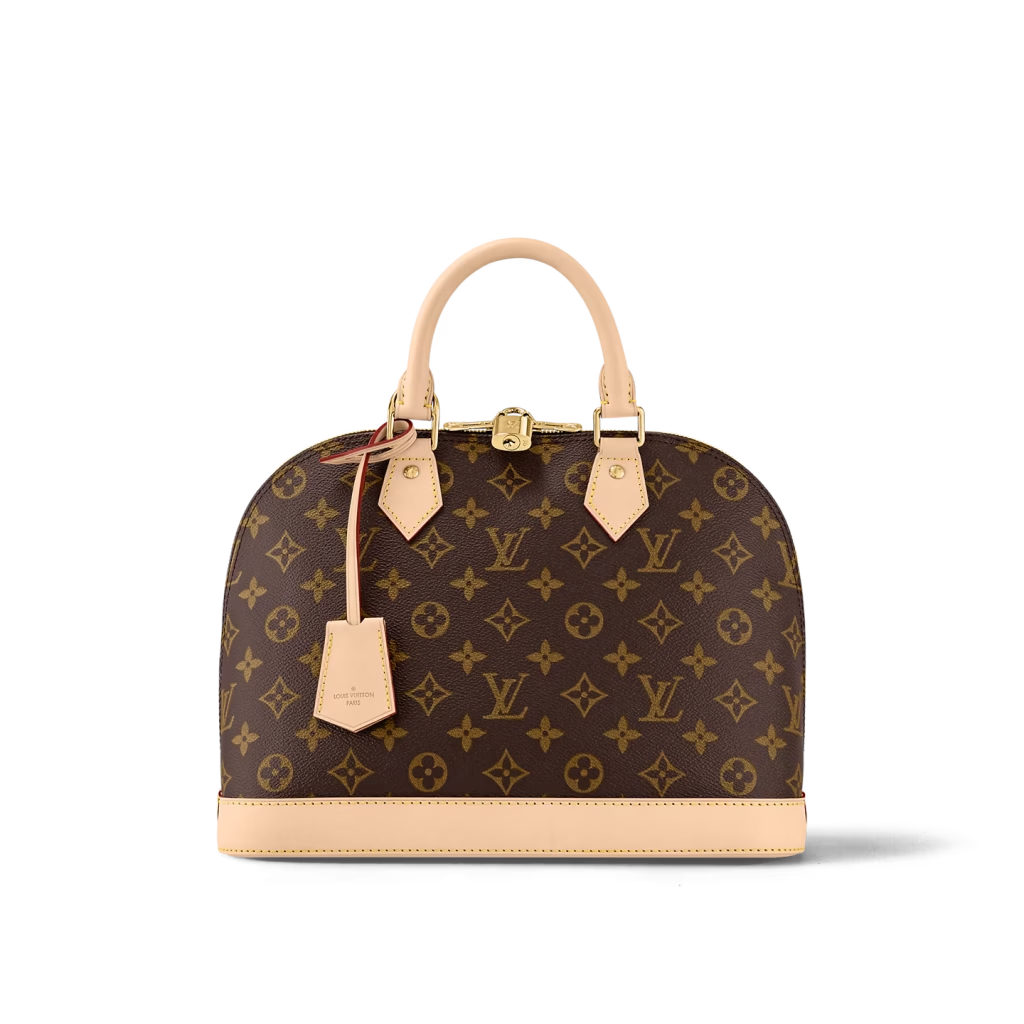


Monogram canvas is the classic—light, durable, instantly recognizable, and deeply tied to the brand’s identity. It’s the Alma that announces itself without raising its voice.
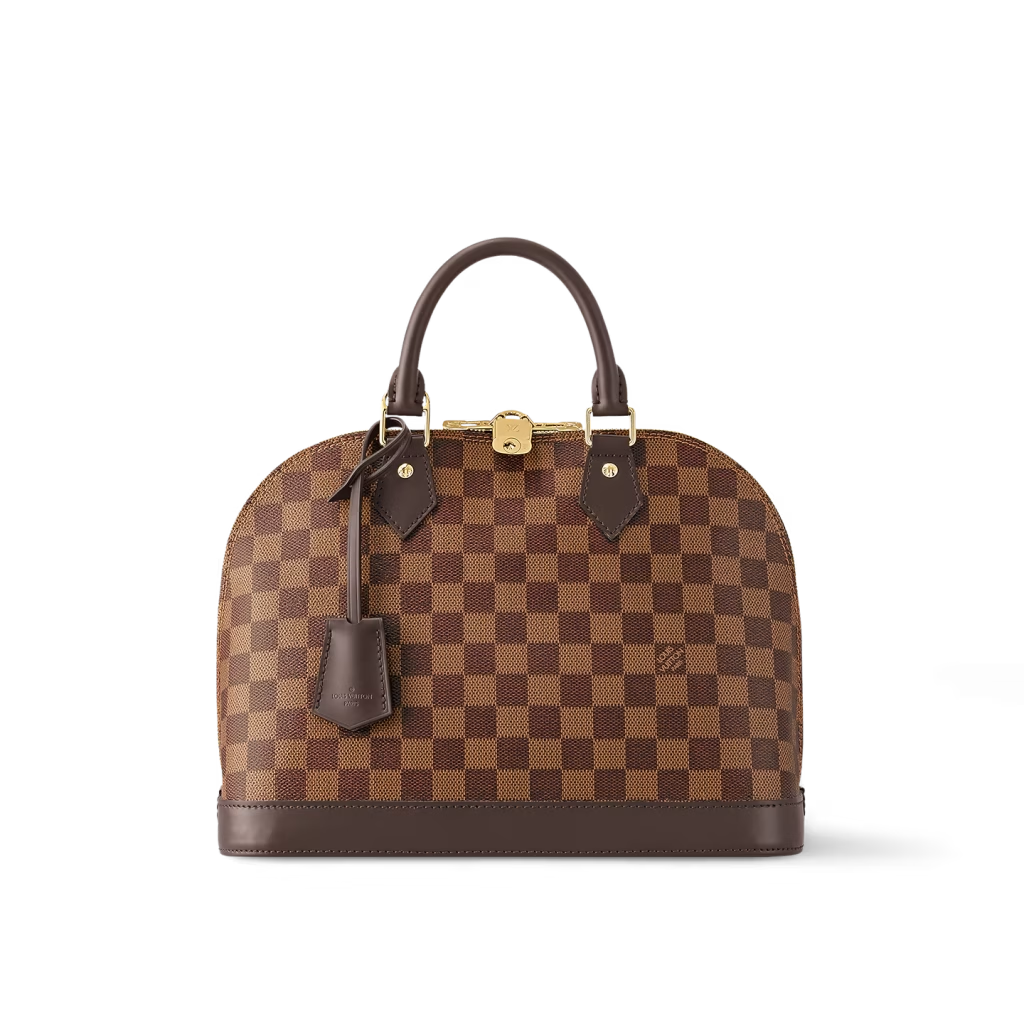
Damier offers a quieter graphic presence—still recognizable, often more forgiving in day-to-day life, and frequently chosen by buyers who want Vuitton without the flash.
Épi leather is one of the Alma’s most faithful partners because it mirrors the bag’s structure with a material that is textured, resilient, and inherently “finished.” There’s something inevitable about Alma in Épi: the silhouette becomes even more architectural, the surface even more refined.
Vernis is glamour with a mirror finish—high impact, often color-forward, and unmistakably “fashion.” It’s not the easiest material, but it is one of the most visually persuasive.
Embossed leathers (like Empreinte) modernize the Alma without changing its posture. They read plush, tactile, and luxe—often more discreet than canvas, but still undeniably Vuitton.
The Practical Truth About Patina and “Real Life”
If you’re buying an Alma in canvas with natural leather trim, you’re not buying a static object. You’re buying a relationship. Vachetta patinas, and it will show your life—sun, rain, oils, time. The warm deepening is part of the bag’s biography. The Alma doesn’t just age; it records its journey – and yours – as it ages, creating a sort of “keepsake” in the very “fabric” of its materials.
The Artists: How the Alma Became a Walking Gallery Wall
The Alma as Canvas, Not Just Accessory
Louis Vuitton’s modern collaboration lineage reads like a museum guest list, and the Alma benefits from that history because of its clean proportions. It gives artists an uninterrupted surface and a recognizable form. Even when the print screams, the silhouette stays legible. The bag becomes wearable art without losing its identity.
Stephen Sprouse: Graffiti as Cultural Artifact

Sprouse’s graffiti moment captured a genuine inflection point. Fashion was beginning to treat collaboration not as a quiet design exercise, but as spectacle—and the handbag, once purely functional or discreetly luxurious, became a public-facing billboard. Stephen Sprouse understood that shift instinctively. His scrawled typography didn’t decorate the Alma; it interrupted it, forcing a conversation between discipline and disruption. Applied to such a rigorously structured silhouette, the graffiti felt deliberate rather than chaotic—an assertion that heritage could withstand provocation without collapsing. In retrospect, the graffiti Alma reads like a time capsule with teeth: unapologetically of its moment, yet still wearable decades later. It’s a reminder that the icon-bag concept isn’t sustained by nostalgia alone, but by a willingness to absorb cultural friction and remain relevant when the conversation moves forward.
Takashi Murakami: Pop Joy Meets House Codes

Murakami didn’t just add color; he rewired the rules. He took a house built on restraint, discipline, and inherited codes and proved it could still be playful without losing credibility. That’s the genius of how his work lands on the Alma: the bag is all structure—domed, balanced, engineered to hold its shape—so the joy doesn’t spill out, it’s framed. The multicolor monogram becomes less “decoration” and more declaration, because it’s contained by an object that refuses to become sloppy or trend-chasing. It’s the fashion equivalent of immaculate tailoring in the loudest color you’ve ever seen: the craftsmanship gives the audacity permission. And that’s why this collaboration still hits decades later—it didn’t dilute the Alma’s identity, it amplified it.
Yayoi Kusama: Infinity Dots, Framed by Discipline
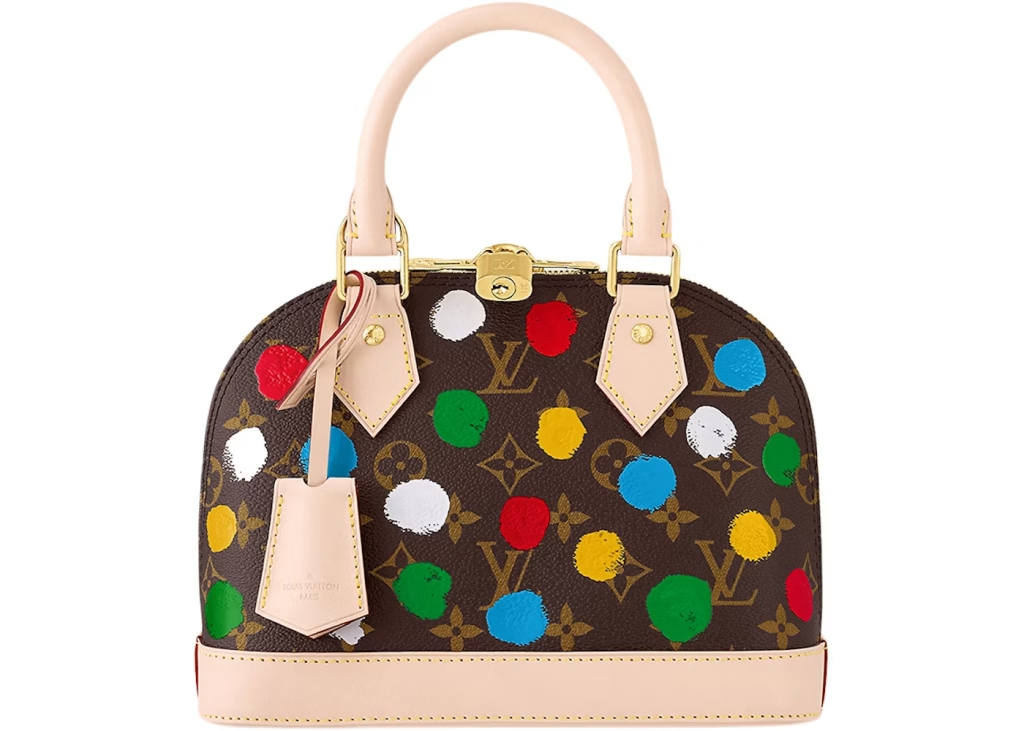
Kusama’s dots are playful, obsessive, instantly recognizable—and on the Alma they land with extra force because the bag is so disciplined. The silhouette doesn’t flinch. It holds its shape, keeps its posture, and gives that riot of repetition a clean frame to live inside. In other words, the dots don’t swallow the Alma; they animate it. The structure gives the motif boundaries, and the motif gives the structure a pulse—like you can almost feel the bag humming with movement even when it’s sitting still.
That’s the magic of this pairing. Kusama brings the art-world intensity—pattern as fixation, repetition as identity—while the Alma does what it has always done: it behaves. It opens cleanly, carries well, holds its form, and looks intentional in motion. You’re not carrying a novelty piece; you’re carrying a real bag that happens to be a traveling exhibition. Wearable art, yes—but still a grown-up bag that shows up, does the job, and leaves an impression.
Why the Alma Remains Popular (Even When Trends Try to Bulldoze It)
The Alma keeps winning because it does what most “icon bags” promise, but rarely deliver: it elevates your look while staying functional. It can be conservative or loud, quiet or collectible, first Vuitton or hundredth. It thrives in resale because it’s always in circulation, which keeps it culturally alive rather than historically preserved.
And perhaps most importantly, the Alma looks intentional. In an era where style can feel disposable, the Alma reads like a choice.
Which Alma Should You Buy? A Narrative Guide (New or Pre-Owned)

If You Want Your First Alma to Feel Like a Ceremony
Choose Monogram canvas with natural trim and accept the patina as the point. This is the Alma that feels like Louis Vuitton in the way people dream about it—the signature canvas, the warm leather aging into honeyed depth, the hardware catching light when you move. It will show wear, yes. But it will also show story. If you want the “I finally did it” feeling every time you reach for your bag, this is the one.
Buy it new if you’re the kind of person who wants the first mark to be yours. Buy it pre-owned if you love the romance of a head start—patina already warmed, the silhouette already softened by life, the price more forgiving.
If You Want an Alma You Can Actually Live With (No Babysitting)
Go darker, go durable, go resilient. Damier in particular tends to feel like a daily-driver Alma—still unmistakably Vuitton, but more forgiving in the real world. You reach for it without negotiating with the weather report.
If you’re the type who wants to set your bag down and keep living your life, this is the lane. It’s luxury that doesn’t require ceremony.
If You Want “Quiet Luxury” Alma Energy
Choose an embossed leather execution that reads elevated and tactile rather than logo-forward. This is the Alma for the person whose style is confident enough not to advertise. From a distance it’s simply beautiful; up close it’s unmistakably Vuitton. It’s also the kind of purchase that ages elegantly—less trend, more permanence.
If You Want the Alma to Do the Talking
This is where artist editions live. Sprouse. Murakami. Kusama. These are not just handbags; they’re cultural objects you can carry. They photograph like a dream and signal taste in a way that basic monogram never can—because you’re referencing a specific chapter of fashion history, not just a brand.
The trick here is to buy with discipline. Condition and completeness matter more. Original accessories matter more. Authentication matters more. But if you want the Alma to feel like a collectible that also works as a bag, this is your world.
If You Want the Most Versatile “One Bag” Alma
Alma PM is usually the sweet spot if you want a true everyday handbag that still reads classic. It carries enough. It looks right with jeans and it looks right with a coat. It’s not trying to be trendy, which is exactly why it stays useful.
If your lifestyle leans more minimal and you love hands-free ease, Alma BB can be your “one bag”—but only if you’re honest about what you carry. The BB is a small bag with a strong presence. It’s not here to hold your life; it’s here to hold your essentials beautifully.
If You’re Buying Specifically for Resale Value or Collectibility
Buy what people hunt for, not what people “like.” Certain artist editions and well-preserved classics tend to remain liquid in the resale market, especially when condition is strong and components are complete. But the best strategy is still the simplest one: buy the Alma you will actually use. A bag that sits in a closet because it’s too precious isn’t an investment; it’s a museum ticket you never cash in.
Collector Notes: How to Buy Smart (New or Pre-Owned)

Choose Your “Alma Life” First, Then Choose Your Alma
The smartest Alma purchases begin with honesty. If you want a daily carry with low stress, choose a material that forgives life. If you want the rite-of-passage experience, choose monogram and let it patina into your story. If you want fashion history, choose an artist edition where the bag becomes the conversation.
Condition Matters Differently on the Alma
Because the Alma holds its shape, wear patterns can be more visible than on softer bags. Corner wear shows. Patina tells on you. Vernis can reveal scuffs and transfer. Hardware will scratch, as it should. Missing pieces—lock, keys, clochette—can affect value and completeness, especially if you’re buying collector-grade.
The Alma Today: Modern Relevance Without Losing Its Soul

Louis Vuitton still sells the Alma as an icon, and houses don’t keep a silhouette alive for decades unless it earns the space. The Alma keeps earning it because it performs—because the design is built, not merely drawn. It remains anchored to its origin logic: Art Deco-inspired structure, disciplined proportions, and that unmistakable domed posture that reads “Alma” at a glance. And yet it’s never been frozen in amber. The house keeps updating the execution in ways that track how people actually live: new materials that change the bag’s attitude, new scales that match modern carry habits, strap options that acknowledge movement, and small refinements that keep the silhouette current without rewriting it.
Just as importantly, the Alma keeps re-entering culture on a loop. Sometimes it returns through re-editions and archival callbacks. Sometimes it rides pure nostalgia—people chasing the version they wanted years ago, or the one they remember from a specific era of fashion. And sometimes it shows up because the market swings again, as it always does, between quiet luxury and maximalist expression. The Alma survives both cycles because it can convincingly play either role. In monogram canvas or dark leather, it’s restrained and grown-up. In patent, bright color, or collaboration prints, it becomes a billboard. Same bag. Completely different energy.
That’s the real secret: the Alma isn’t one bag. It’s a framework—an architectural shell with enough structural integrity to absorb reinvention without losing its identity. Louis Vuitton doesn’t have to chase novelty when the underlying form is already that strong. It simply re-skins the idea for each new era, and the shape keeps winning because the design underneath is doing the heavy lifting.
FAQ
When was the Louis Vuitton Alma created?
Its roots trace to 1934, when the silhouette existed as the Squire Bag, before later name evolutions and its official “Alma” naming in 1992.
Why is it called the Alma?
The name is associated with Paris and became the official model name in 1992, replacing earlier names used for the same evolving silhouette.
What is the most popular Alma size today?
Alma BB and Alma PM dominate—BB for crossbody-friendly wear and PM for daily essentials with classic proportion.
Which artist editions matter most for collectors?
Stephen Sprouse “Graffiti,” Takashi Murakami (including re-editions), and Yayoi Kusama “Infinity Dots” are among the most discussed and collected.
Is the Coco Chanel origin story true?
It’s widely repeated and culturally significant, but not centered in Louis Vuitton’s official heritage narrative—best treated as well-sourced mythology rather than a brand-confirmed fact.